
Hopkins County Criminal Court Cases
Hopkins County uses two trial-court levels at one courthouse. Circuit Court, part of Kentucky's 4th Judicial Circuit, hears felony prosecutions after indictment. District Court handles misdemeanors, violations, traffic cases, and the first stages of a felony matter. One elected Circuit Court Clerk serves both. Tanya M. Bowman's office at the Hopkins County Justice Center, 120 E. Center Street in Madisonville, is the source for the official Hopkins County criminal court file.
The file follows what prosecutors charged and what the judge ordered. It is distinct from a police narrative and a jail booking entry. A booking charge may change before indictment, and the docket is where an amended charge, dismissal, plea, verdict, sentence, or revocation becomes part of the court record. Circuit Criminal can be reached at 270-824-7501. District Criminal uses 270-824-7507 and 270-824-7508. Public hours are Monday through Friday, 7:30 a.m. to 4 p.m.
The official Kentucky Court of Justice profile shows the local court and clerk contacts.
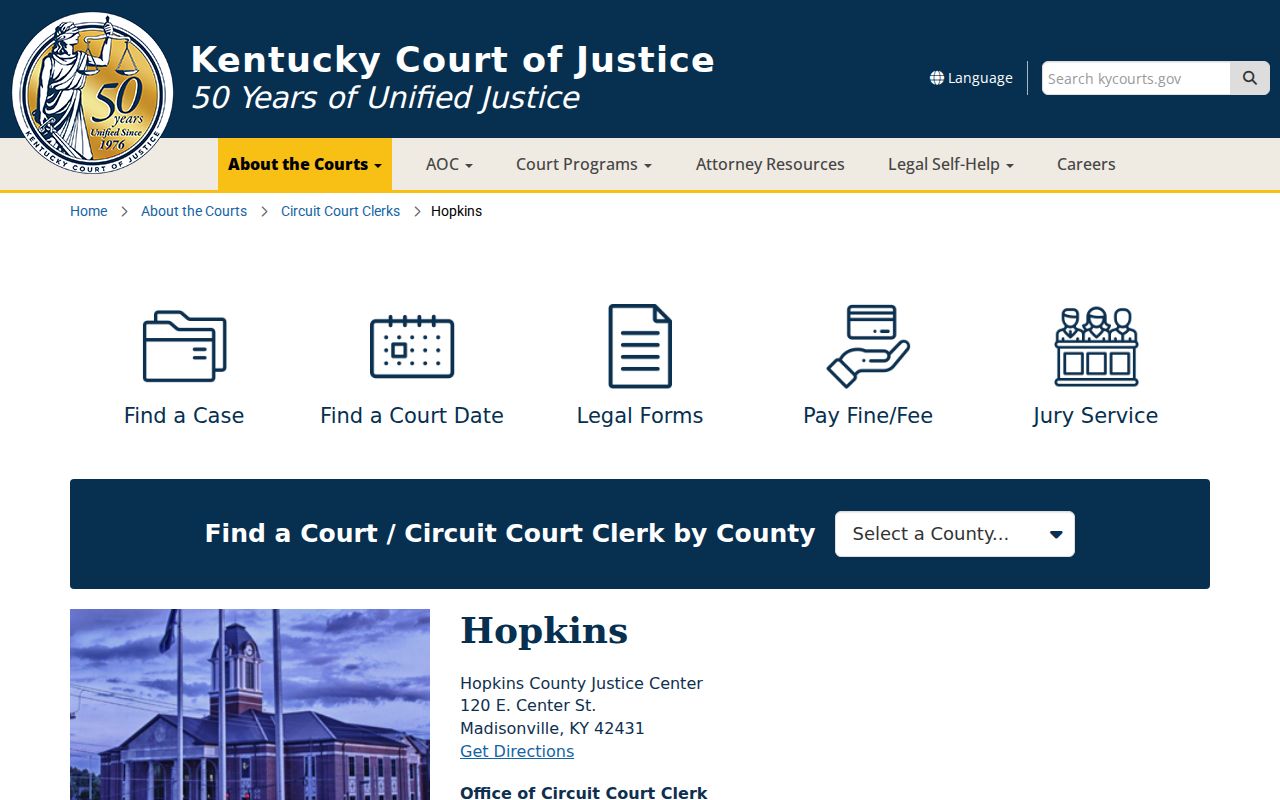
That page is the best first check before a visit because office details can change.
Hopkins Circuit and District Lines
Choosing the right Hopkins County criminal desk saves a transfer. Call Circuit Criminal for an indicted felony or a Circuit case number. Call District Criminal for a misdemeanor, violation, traffic charge, or a felony complaint still at its preliminary stage. The main clerk number, 270-824-7502, is useful when the case level is unknown. Give the full name, an approximate year, and the case number when available. Share a date of birth only through a secure method if the clerk requests it.
Hopkins Circuit Criminal
120 E. Center Street
Madisonville, KY 42431
270-824-7501
Monday-Friday, 7:30 a.m.-4 p.m.
Hopkins District Criminal
120 E. Center Street
Madisonville, KY 42431
270-824-7507 or 270-824-7508
Monday-Friday, 7:30 a.m.-4 p.m.
Cash, check, or money order are listed payment choices, though cash is required for bonds and restitution. No local per-page or certification fee is published, so ask before ordering.
Searching Hopkins County Case Records
A public user should begin with the actual Hopkins County clerk file, not assume that CourtNet is open to everyone. The court-record request instructions explain that the clerk of the court holding the file is its custodian. Request the docket first. It identifies the exact complaint, indictment, motion, order, plea, judgment, or expungement document worth copying.
- Decide whether the matter belongs in Hopkins District or Circuit Court.
- Call the matching criminal desk with the name, approximate year, and case number if known.
- Ask for the case status and docket, then name the documents needed.
- Confirm whether the file is at the counter, archived, or at a records facility.
- Ask about copy and certification fees plus accepted payment before placing the order.
- Use an AOC report only when a statewide Kentucky summary is needed.
The official request page shows why a case-file request differs from a broad administrative-record inquiry.
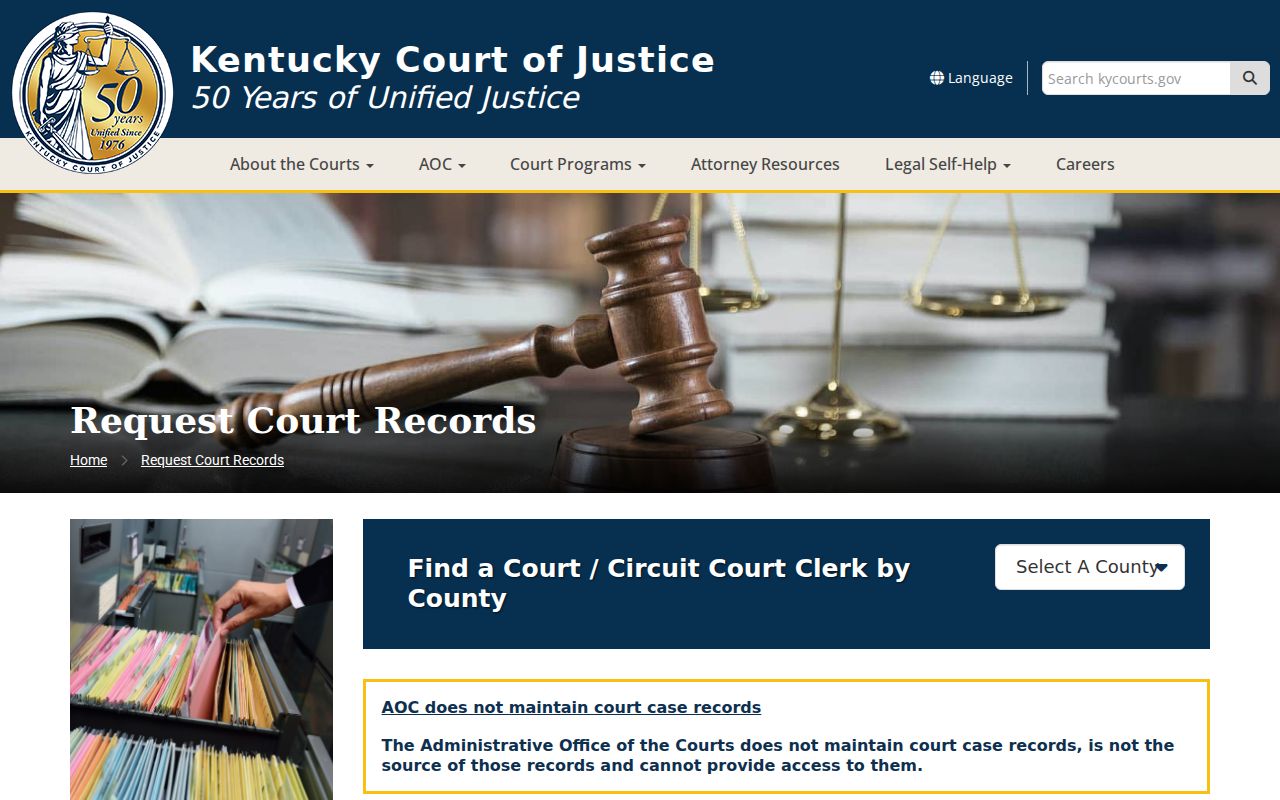
It directs readers back to the court clerk for pleadings and orders in a named case.
Why AOC Lacks the File
The Administrative Office of the Courts maintains statewide systems and reports, but it is not the custodian of each Hopkins County pleading. Its administrative open-records channel expressly excludes case records, background checks, and court statistics. Sending a case-file request there adds delay. The Circuit Court Clerk holds the local judicial record and can say whether an older public file moved off-site.
The AOC administrative-record boundary is visible in the official source below.
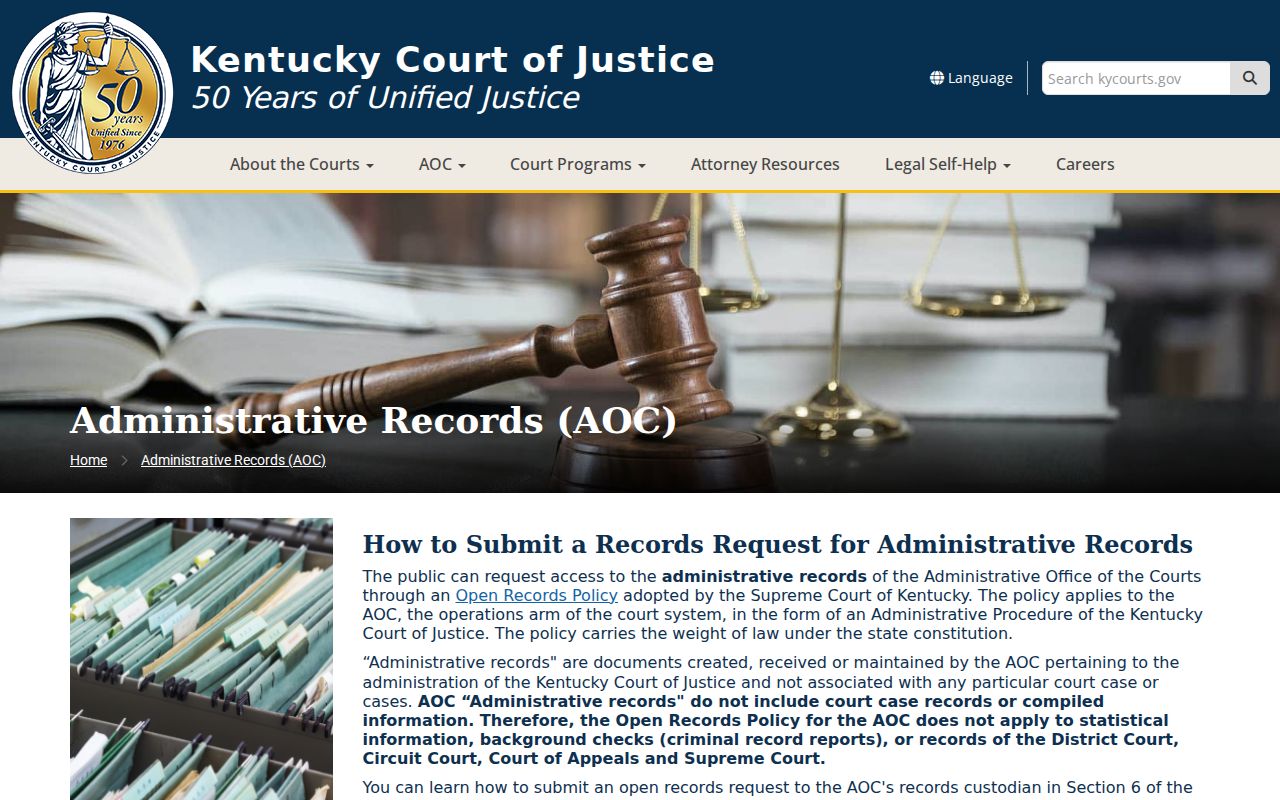
Use that distinction to route a request once instead of treating all Kentucky court data as one product.
Note: If a public Hopkins County file is off-site, ask the clerk for both the facility name and its locator numbers.
Inside a Hopkins County Case File
A Hopkins County criminal case file centers on the prosecution, not the booking. Its header identifies the case number, filing date, court, division, and status. Party entries name the Commonwealth, defendant, and attorneys. Charge rows show the offense, KRS citation, class, count, and amendments. Docket events can include arraignment, preliminary hearing, grand-jury action, motions, plea, trial, judgment, sentence, probation, revocation, and warrant or capias activity.
| Header | Case number, filing date, Circuit or District Court, division, and status. |
|---|---|
| Charges | Description, KRS citation, offense class, counts, and amendment history. |
| Docket | Hearings, filings, motions, pleas, orders, judgment, and later review. |
| Financial entries | Bond, fines, costs, restitution, and balances when public. |
| Sentence | Confinement, probation, conditions, or other court-ordered terms. |
| Protected data | Redacted identifiers and protected information involving minors or victims. |
A statewide AOC report summarizes Kentucky court data, while the local file can carry the document and event detail needed to understand an outcome.
Hopkins CourtNet Snapshot Limits
CourtNet 2.0 is a statewide case-information system for subscribed attorneys and justice partners. It is not a confirmed unrestricted free name-search portal for Hopkins County residents. AOC also warns that CourtNet data is not real time. Its analytics are snapshots, and counts of charges are not counts of people. One defendant may have several cases or counts.
The official CourtNet analytics page displays the state reporting layer.
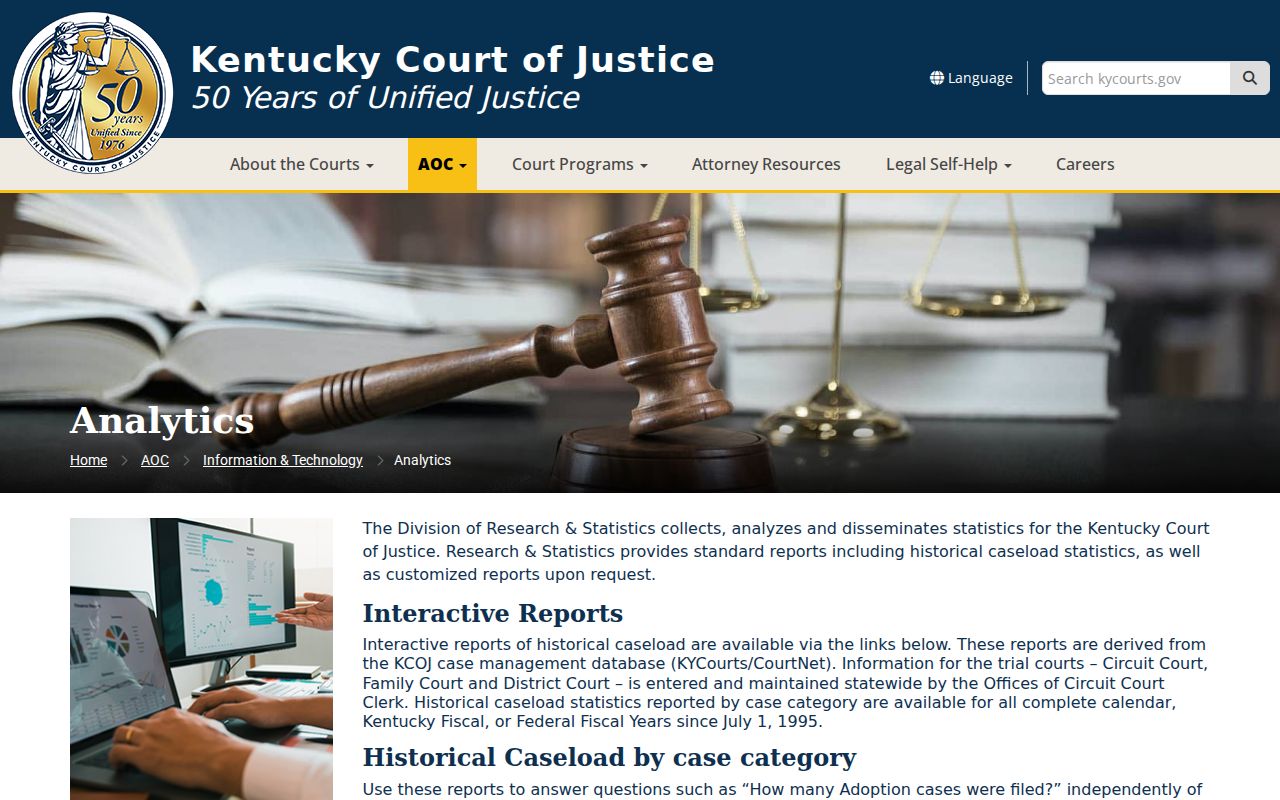
For a current status or disputed entry, compare the snapshot with the Hopkins clerk's docket and signed orders.
How a Criminal Case Moves
A Hopkins County felony often appears in District Court before it reaches Circuit Court. Police may arrest or issue a citation, then a complaint and initial appearance create early judicial entries. District Court handles release and the preliminary felony stage. A grand-jury indictment moves the prosecution to Circuit Court, where arraignment, discovery, motions, plea or trial, judgment, and sentence follow. Misdemeanors generally stay in District Court.
Case flow: Charges Filed › Arraignment › Pretrial › Plea or Trial › Disposition › Sentencing
The docket can also continue after sentence through appeal, probation review, revocation, or expungement. A pending status is not guilt. A dismissal ends a charge without conviction, while acquittal is a not-guilty outcome. Diversion is a supervised route that may avoid conviction if its conditions are met.
Reading Hopkins Case Outcomes
Short court terms can change the meaning of a Hopkins County criminal record. “Nolle prosequi” means the prosecutor formally chose not to proceed. “No bill” means a grand jury declined an indictment; “true bill” means it returned one. A bench warrant or capias can reflect failure to appear or comply, not a new conviction. Concurrent sentences run at the same time, while consecutive sentences run one after another.
- Disposition
- The final or current result of a charge.
- Dismissal
- Termination of that charge without a conviction.
- Acquittal
- A not-guilty result after adjudication.
- Diversion
- A supervised path that can avoid conviction after conditions are met.
- Indictment
- A grand jury's formal felony accusation.
Read each result at the charge level. One Hopkins County case can contain several counts with different outcomes.
Hopkins Files Outside Federal Court
Federal cases do not appear in the Kentucky AOC report. Hopkins County lies in the U.S. District Court for the Western District of Kentucky. Search PACER after registration for an official federal docket, then contact the federal clerk for the source record. PACER charges the judiciary's current per-page fee, subject to its quarterly low-usage waiver.
The PACER service is a separate federal access route.
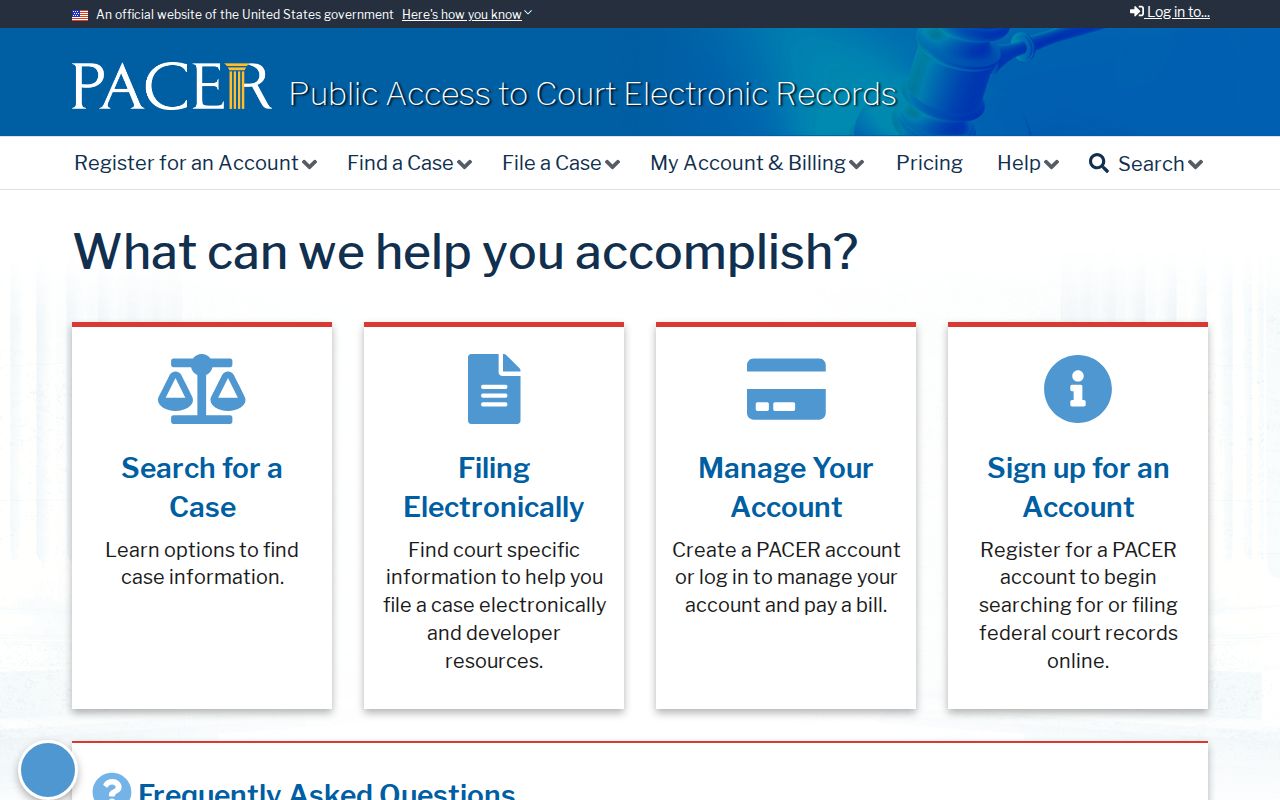
A no-result Hopkins clerk search does not rule out a Western District prosecution.
The Western District of Kentucky site confirms the federal court serving Hopkins County.
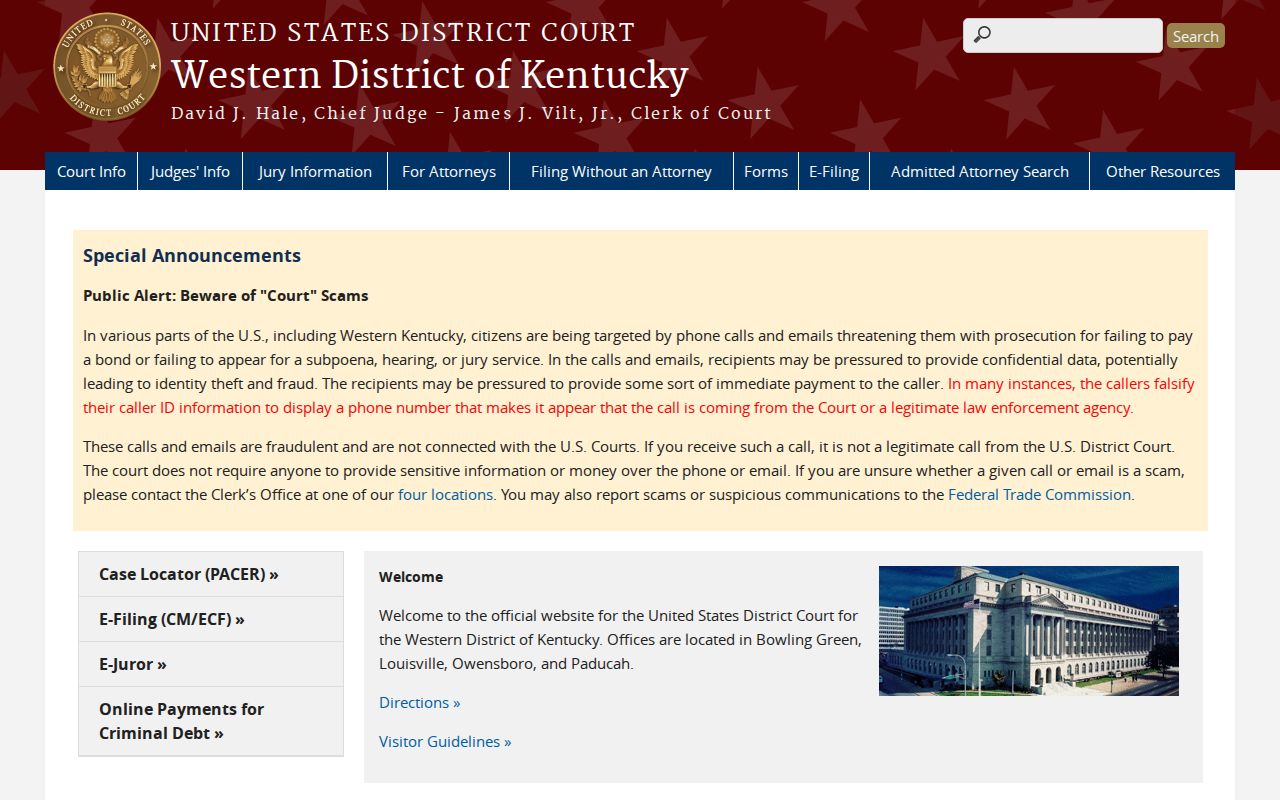
Keep the state and federal dockets separate when comparing charges and outcomes.
Case Record Access & Restrictions
Public court access does not mean every field or case type is open. Hopkins County files may redact Social Security numbers, protected birth or financial data, information about minors, and protected victim details. Juvenile, sealed, and expunged matters have tighter limits. A file can also be destroyed under a retention schedule, so absence must be checked with the clerk rather than guessed from an online result.
Kentucky's executive-agency Open Records Act does not replace judicial case-file rules. KRS 61.870 through 61.884 guides requests to local agencies, while the clerk remains the case-file custodian. If a public case does not appear in a report, ask the Hopkins County clerk whether the issue is spelling, timing, court level, archive status, confidentiality, or expungement. Obtain the signed disposition when the outcome matters.
Expunged and purged matters do not appear in AOC reports. A qualifying dismissal or acquittal can be removed automatically under Kentucky's process, while other eligible records require certification and a petition in the county of the original charge. If an older copy still shows a case, compare it with the clerk's signed expungement order and identify which custodian has not yet updated its file. A court order, police record, booking entry, and statewide report can update on different schedules.
Verify at the source. CourtNet and AOC summaries can lag. The Hopkins County docket and signed order control the local case outcome.