
Checking Criminal History in Hopkins County
A useful Hopkins County criminal record check begins by deciding whether the goal is a filed case, police report, booking, statewide court summary, prison or supervision entry, warrant status, or registry record. No single county portal combines them. The Justice Center clerk holds Circuit and District cases. The arresting agency holds its report. Hopkins County Jail holds local booking data, while KOOL covers Kentucky Department of Corrections custody and supervision.
- Write down the full name, spelling variants, approximate year, and known case, report, or booking number.
- Call the Hopkins Circuit or District criminal desk for the official case docket and disposition.
- Contact the arresting agency or jail for the report and booking portion.
- Order an AOC FastCheck or One-Time Request report when statewide Kentucky court coverage is needed.
- Use fingerprints through KSP or the FBI for identity-linked self-review when name matching is not enough.
- Compare charges and dates, then obtain the signed order from the source court when an outcome matters.
Each step answers a different question. Combining results is more reliable than treating a search hit as a complete history.
Four Hopkins Criminal Record Locations
Hopkins County's physical layout explains why a search often takes more than one call. The Justice Center at 120 E. Center Street holds court files. Madisonville Police is nearby at 99 E. Center Street, but the Sheriff's Office operates at 261 Responders Lane and the jail books people at 2250 Laffoon Trail. The county Government Center still displays a sheriff address on an elected-official page, so call before traveling.
| Custodian | Record | Contact |
|---|---|---|
| Hopkins Circuit Court Clerk | Circuit and District case files | 270-824-7502 |
| Hopkins County Sheriff | Sheriff reports and process | 270-821-5661 |
| Hopkins County Jail | Booking and current custody | 270-821-6704 |
| Arresting city police | City incident or arrest report | Agency-specific |
Ask the office to confirm custody before requesting copies. An agency can only release the record it maintains.
Kentucky Official Background Checks
The Kentucky Court of Justice AOC offers public statewide court reports through FastCheck and One-Time Request. FastCheck requires registration and returns a processed result online. One-Time Request is sent by U.S. mail. The report costs $25. A card payment adds 2.25 percent or $2.50, whichever is greater. Processing follows received order, so neither option should be promised as instant.
AOC reports draw on Kentucky court data in all 120 counties. They omit federal information, confidential case types, and expunged or purged matters. If someone orders a report about another person and AOC finds a record, the agency notifies that subject and sends a copy. For self-review where identity matching matters, KSP provides a name or fingerprint-supported route under KRS 17.185.
The AOC background-check page shows the two order choices.
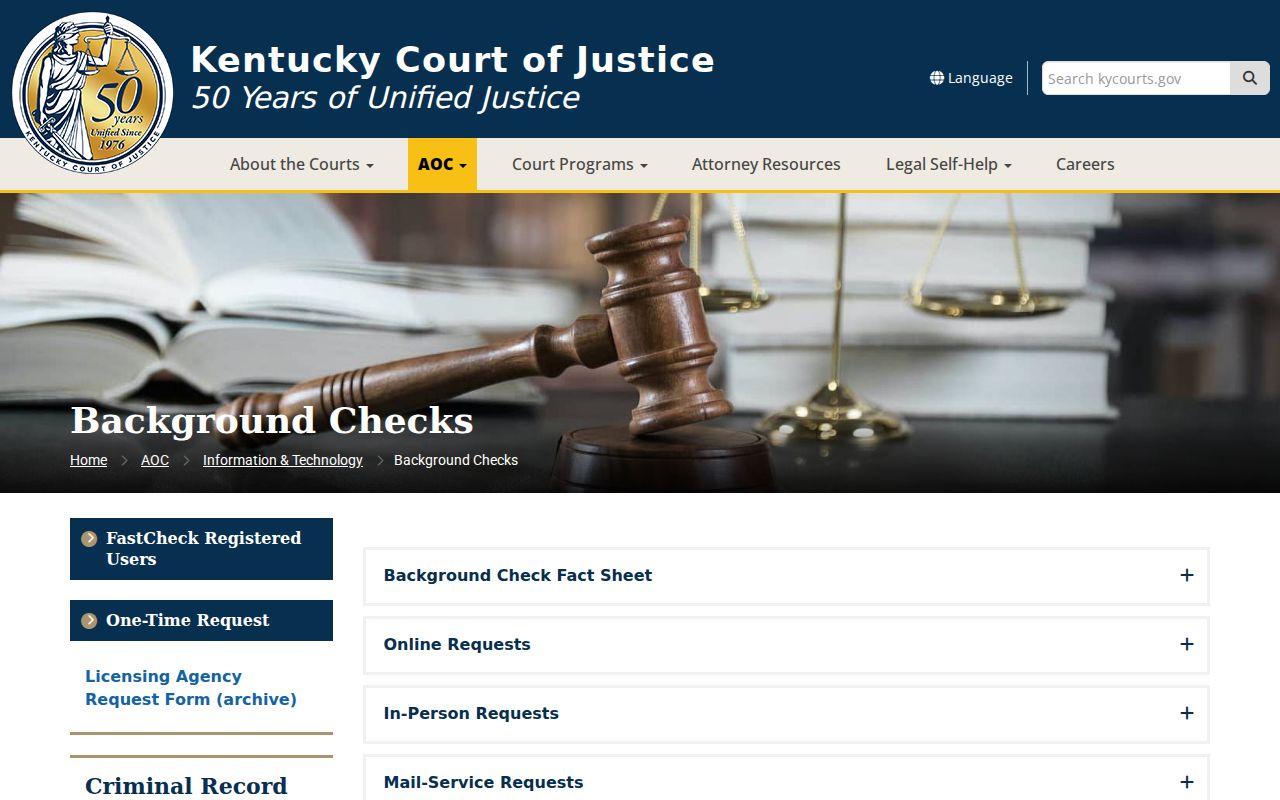
Use its current instructions and costs on the day of the request.
Hopkins Criminal Records in FastCheck
An AOC report is a name-based compilation of Kentucky court records. A repository rap sheet organizes identity data and arrest cycles, often linked through state or FBI identifiers. The local court file goes deeper into filings, hearings, orders, and disposition. Calling all three products a background check hides important gaps.
| Product | Best for | Does not establish |
|---|---|---|
| Hopkins jail entry | Recent booking and custody | Guilt or final charge |
| Hopkins court file | Filed charges and disposition | Every out-of-county event |
| AOC report | Kentucky court cases statewide | Federal cases or fingerprint identity |
| KSP/FBI self-review | Biometric identity-linked history | Every local document never reported |
Use the product label when recording results. It preserves what the source can and cannot prove.
Criminal Record Types
Hopkins County criminal records emerge at different points in the justice process. An incident or arrest report records allegations and officer action. A booking entry records intake and custody. A complaint begins a court matter, while an indictment reflects grand-jury action. The court file then carries docket events, orders, judgment, and sentence.
- Police record: event narrative held by MPD, the sheriff, DSPD, Nortonville Police, or KSP.
- Booking record: intake, charge, bond, and custody data held by Hopkins County Jail.
- Court record: filed charges, hearings, disposition, and judgment held by the Circuit Court Clerk.
- State report: AOC's Kentucky-wide court compilation or KSP identity-linked history.
- Special record: warrant, KOOL supervision, or KSP registry entry maintained under its own rules.
Juvenile, sealed, expunged, protected-victim, and active investigative material can have restricted access.
Hopkins Booking and Court Charges
A booking charge, filed charge, and conviction are three separate facts. Police choose an arrest allegation based on the event. The jail records that booking charge at intake. A prosecutor can reject, amend, or add charges, and a grand jury decides whether to indict a felony. Only the court supplies the controlling disposition.
This is why a name on a jail entry should not be described as a conviction. A matter may be no-billed, dismissed, diverted, acquitted, or convicted. To follow a Hopkins County arrest through the legal process, obtain the agency report, call the jail for booking facts, and use the Hopkins County criminal court case file for the outcome.
- Booking charge
- The allegation entered when the jail receives a person.
- Indictment
- A grand jury's formal felony accusation.
- Disposition
- The final or current result of each court charge.
- Expungement
- Statutory removal of eligible records by automatic process or court order.
Inside a Hopkins County Criminal Record
A court record uses a case number, filing date, court division, parties, charge description, KRS citation, status, hearing history, and judgment. A repository history is organized around identity information and arrest cycles. A booking entry emphasizes admission, physical descriptors, charge, bond, and release. Read the field in the context of its source.
| Name and identifiers | Legal name, aliases, birth data, and agency or state identifiers where lawful. |
|---|---|
| Arrest and booking | Agency, date, booking number, custody, and booking charge. |
| Charges and statutes | Offense description, KRS citation, class, count, and amendments. |
| Disposition | Pending, dismissed, diverted, acquitted, or convicted result by count. |
| Sentence | Confinement, probation, financial terms, and later court orders. |
| Custody or supervision | Local jail status or KDOC incarceration, probation, or parole data. |
Protected identifiers may be redacted. A missing public field should not be filled from an unofficial people-search service.
Hopkins Custody Records: Jail vs KOOL
Hopkins County Jail holds current local booking and custody records. Its official site publishes services and rules, but no accessible public name-search form was confirmed. Call 270-821-6704 for a county detainee. KOOL, the Kentucky Online Offender Lookup, covers sentenced state prisoners and people under KDOC supervision. It is not a county arrest log.
KOOL supports name, alias, offender PID, age, race, gender, custody status, supervision county, location, offense, KRS code, conviction county, and date filters. A no-result cannot prove that no Hopkins District probation, diversion, pretrial condition, or local booking exists. Verify the sentence with the clerk and use VINELink for custody notifications.
Public Access Laws in Kentucky
The Kentucky Open Records Act governs executive and local agency records, but a judicial case file is requested from its court clerk. KRS 17.150 addresses law-enforcement reports and criminal-justice information. KRS 17.185 supports a person's name or fingerprint-based self-check through KSP. Access can still yield redactions or withholding tied to a specific exemption.
Key Kentucky laws:
KRS 61.870-61.884 sets the Open Records Act framework for agency records.
KRS 17.150 governs access treatment for law-enforcement reports and criminal-justice information.
KRS 17.185 authorizes a subject's name or fingerprint-supported KSP check.
KRS 431.073 establishes relief for eligible felony convictions.
KRS 17.580 requires KSP's public sex offender registry.
The Kentucky Attorney General publishes open-records guidance and appeal information.
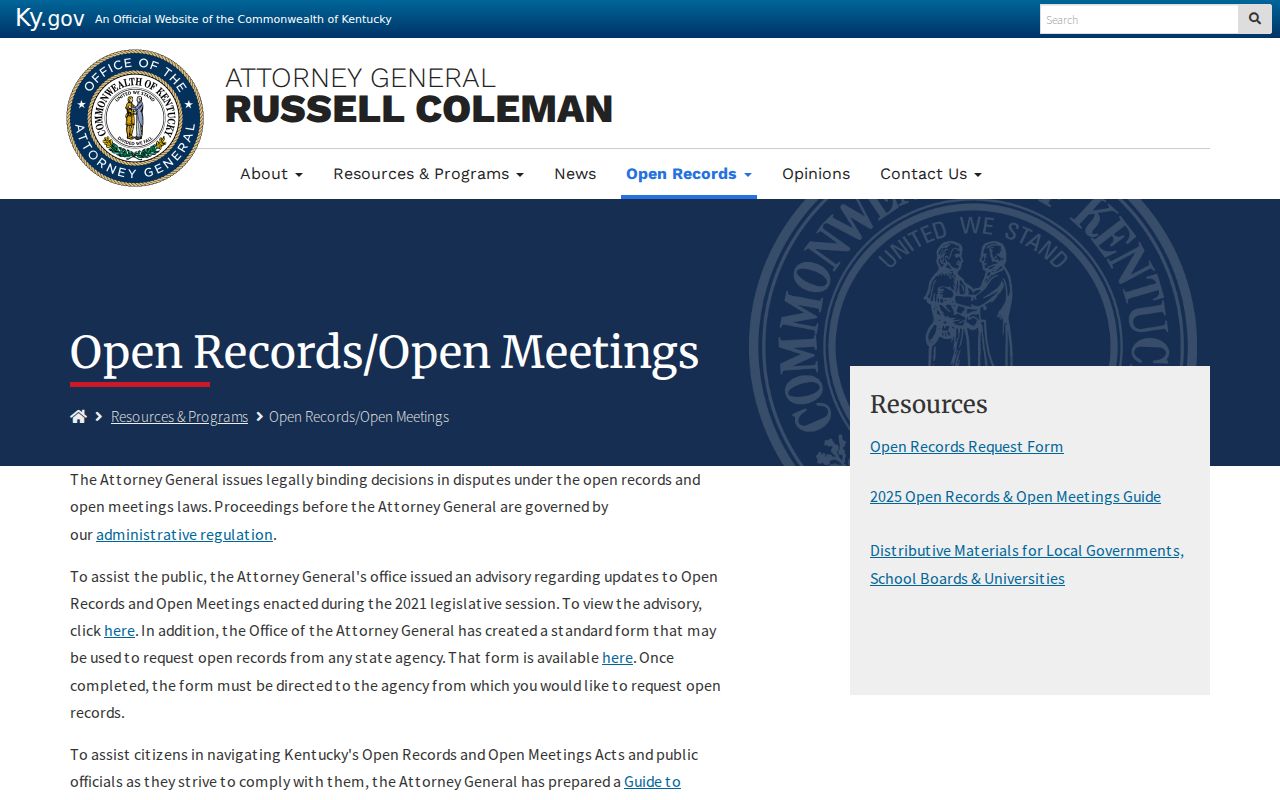
Use the correct custodian and describe an existing record with enough detail to locate it.
Hopkins Criminal Court Files Off-Site
An older Hopkins County court file may sit at the clerk's counter, at a records facility, or no longer exist under the retention schedule. If a public file moved, the clerk should provide the facility name and case or file locator numbers. That is more useful than submitting a generic county request to an office that never held the case.
Call the correct criminal line first: Circuit Criminal at 270-824-7501 for felony files, or District Criminal at 270-824-7507 or 270-824-7508 for misdemeanors, traffic, violations, and preliminary felony matters. Ask for the docket before paying for copies. It identifies which signed order or filing resolves the question.
Sealed, Expunged, and Restricted Records
Kentucky restricts juvenile records, sealed or expunged matters, protected victim and minor data, Social Security numbers, financial identifiers, and qualifying active investigative material. Expunged or purged matters do not appear in AOC reports. A custodian can redact protected fields while releasing the separable public part.
Hopkins County expungement normally starts with a $40 AOC certification. The applicant then uses the appropriate AOC form and files in the county where the original charge arose. Eligible felony conviction relief under KRS 431.073 has a $300 filing total, with $50 due at filing and the balance after relief is granted, plus the certification cost. Many eligible Class D felonies require at least five years after completion of sentence or supervision, subject to statutory exclusions.
The Kentucky Court of Justice explains the official certification and petition path.
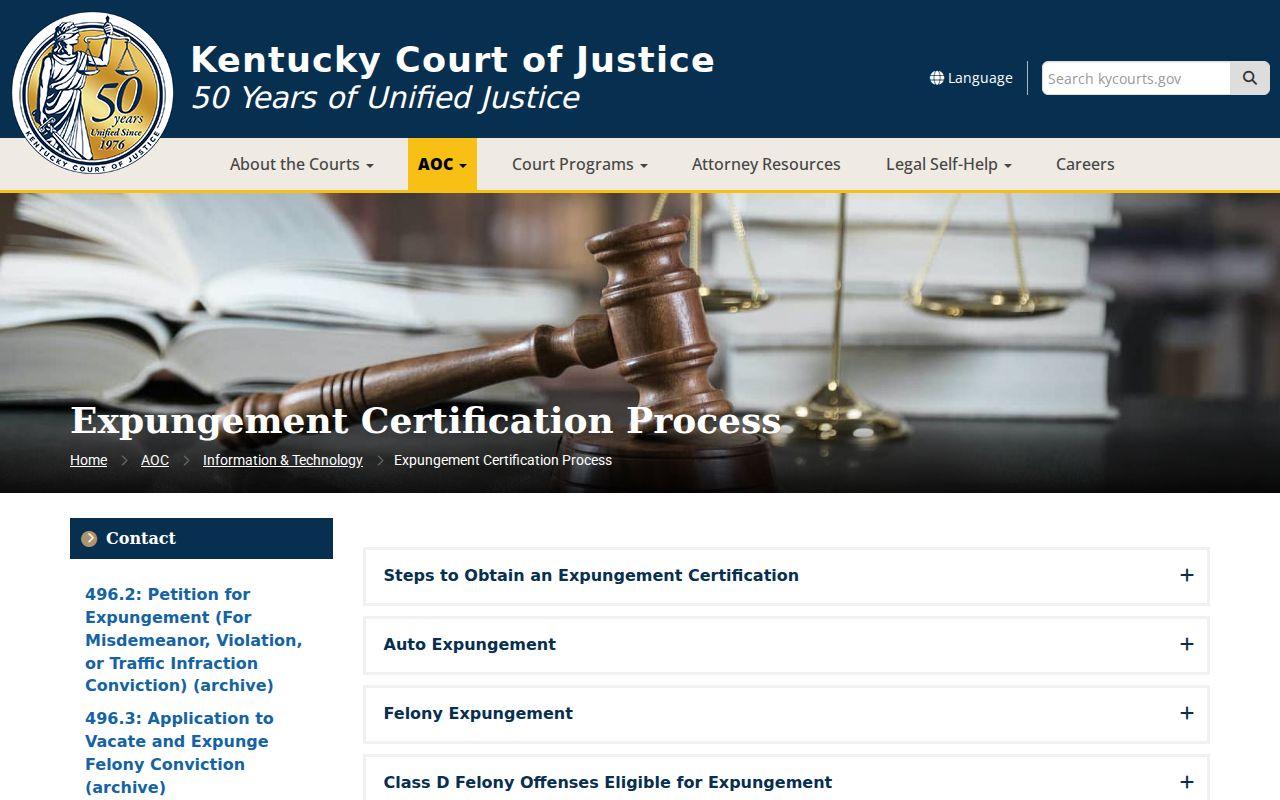
Qualifying dismissals and acquittals on or after the statutory date can be automatically expunged after 30 days unless the defendant objects.
Hopkins Criminal Record Fingerprint Review
A name search can confuse people with similar names or miss an alias. Fingerprints reduce that risk and connect records through biometric identifiers. KSP Post 2 at 1000 Western Kentucky Parkway in Nortonville is the local fingerprint contact identified in the research. Call 270-676-3313 to confirm appointment rules, fee, accepted identification, card supply, and hours before travel.
The FBI Identity History Summary is subject-only and uses the electronic EDO portal, fingerprints, and the fee shown during ordering.
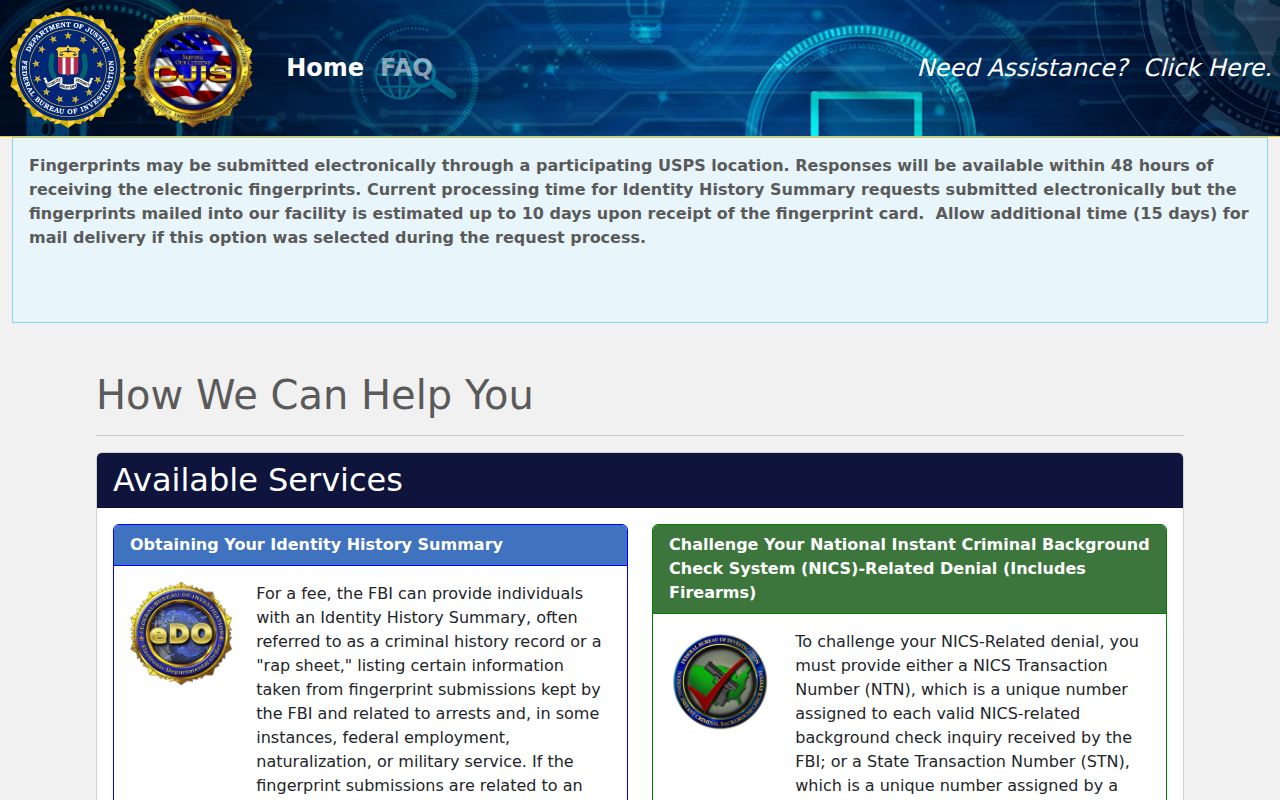
The FBI product is national and does not replace the detailed Hopkins County court or police file.
Hopkins Probation and Parole Records
Kentucky probation and parole are state-run through the Kentucky Department of Corrections Division of Probation and Parole. KOOL can show supervision status, county, office or location, convictions, begin dates, abscond or escape dates, and projected release information. The Hopkins County court record remains the best proof of the sentence and any revocation order.
The KDOC Probation and Parole directory identifies the state supervision structure.
A KOOL absence does not rule out District Court probation, diversion, or a local pretrial condition.
Hopkins County Criminal Records by City
Hopkins County's three largest incorporated cities are Madisonville, Dawson Springs, and Nortonville by 2020 Census count. City police keep their own reports, but Kentucky does not maintain a separate municipal-court layer for these cities. Their cases route to Hopkins District Court, with indicted felonies moving to Circuit Court. Bookings go to Hopkins County Jail.
Madisonville Criminal Records
19,542 residents in 2020. MPD provides distinct police-record forms and a $3 accident-report channel.
Dawson Springs Criminal Records
2,452 residents in 2020. DSPD accepts direct phone, email, and fax contact for specific reports.
Nortonville Criminal Records
1,204 residents in 2020. KSP Post 2 makes the city a key state-police and fingerprint channel.
Start with the city page when the arresting agency or event location is known. Move to the county clerk and jail for the next parts of the record.
Madisonville also shows why a city record and a county case are not interchangeable. Its City Clerk and Police Department use separate open-records forms. MPD supplies a community crime map and a $3 accident report, yet neither product establishes how a prosecution ended. Dawson Springs has no confirmed web request form, so a precise phone, email, or fax request to its police department is the workable first step. Nortonville has no verified city lookup portal in the research, but KSP Post 2 gives residents a state-police contact for trooper reports and fingerprint questions.
The same routing rule applies to warrants. Hopkins County has no confirmed official public active-warrant name search. A person checking their own status should contact the criminal clerk for a known public case, then the issuing police or sheriff office, and ask about bond and safe appearance instructions before going anywhere. A pending or sealed warrant may not appear in a public result. A cleared warrant can also linger while systems synchronize, so the clerk's recall or satisfaction order is the useful proof of status.
Local workload numbers need similar care. The sheriff's June 2026 dashboard listed calls, served papers, vehicle inspections, collision investigations, and transports. Those categories show office work, not arrest totals, and they cannot be added into a crime figure. Hopkins-specific court analytics also use CourtNet snapshots, where charges are not people and data is not real time. Both sources add context only when their limits travel with the number.